
Planning something new for your farm?
Updated: Jan 23
Inspired to develop or expand a farm market, corn maze and pumpkin patch, U-pick, winery or brewery with tasting room? These agriculture-related or on-farm diversified businesses support farm families, connect city folk to where their food comes from, and boost the value of locally produced agricultural commodities. But getting started takes a bit more than putting up a sign or advertising on social media. Consider some of the basics early on to avoid some common pitfalls.

What to consider as you plan
As you develop your idea from the basic concept, there is lots to think about, including business plans, permits, approvals, development charges, tax implications, and how the project pieces will fit into your property. Talking with professionals early on can avoid issues later - like discovering you don't have enough room for a septic system, so you need to cut back the size of the building you've planned. The right professionals could save you time or money or identify ways to make your project more sustainable.
Groups like farm organizations (Farm Fresh Ontario, Ontario Federation of Agriculture, Christian Farmers of Ontario or National Farmers Union), the Ministry of Agriculture, and your local municipality may be able to support you in the initial planning stages. These groups might be able to share advice and point you towards possible funding opportunities or training to help you develop your plan.
Build your team
Rural planners and architects have their own areas of expertise that can help you match the scale of your project and planned coverage of your lot with applicable policy or official plans in your area. Professionals are happy to work together to help your business succeed. For example, architects or rural planners who help coordinate the project often work with septic designers and engineers. They help obtain permits and understand the particulars of zoning, site plan approval and what is required under the Ontario Building Code. These discussions will also help you better understand what can work for your site.

Evaluate your site
Think about the space you have on your property for some of the less exciting but necessary pieces including washrooms, septic, parking, drainage, and stormwater management. Depending on your property, you also might need to consider a pond or tanks for fire suppression, minimum distance setbacks, and environmentally sensitive features. Don’t expect the septic system to fit into a tiny space in a corner of the property once you have planned everything else. While septic systems aren’t often top of mind, leaving them till the end can make for a more complicated and expensive design.
As septic system designers, we start by talking with our clients or their design team about plans such as existing and planned buildings, plans for visitors to the property, plans to prepare or serve food on site, and if water is used in a production process on-site. We also check for any sensitive environmental features that could impact where construction can happen and look at the soil type. The difference between sandy, well-drained soil and clay or poorly drained soil can have a big impact on the size and type of septic system.
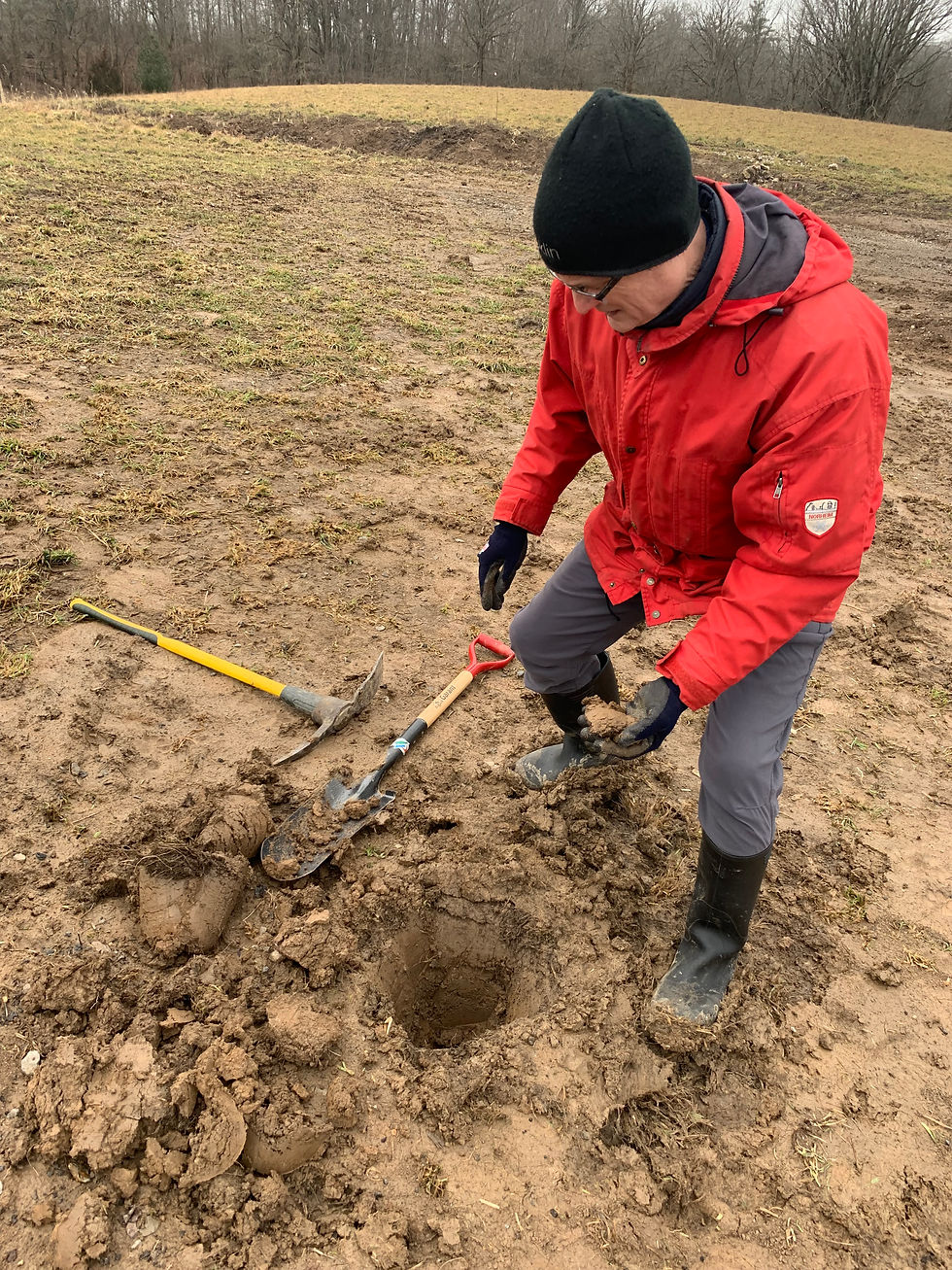
As an example, if you wanted to open a winery in an area of heavy clay, you would need to budget for pre-treatment for process water and to allocate more space for the dispersal bed than if your soil was sandy. An engineer could advise how many cases of wine you could produce along with how many guests you could serve for wine tastings to keep your wastewater daily design flow below 10,000 L/d. Any daily design flow of greater than 10,000 L/d for your property means your wastewater is no longer under the jurisdiction of the local building official and the Ontario Building Code but must be managed under an Environmental Compliance Approval (ECA) through the Ministry of the Environment, Conservation and Parks (MECP). Expect additional time and fees for an ECA process instead of a septic permit through your local building department. However, if your goals are for something larger, we can help start the process to optimize your time and financial investment.

Plan ahead
Planning ahead can also make it easier to incorporate plans for environmental sustainability or room for future expansion. If sustainability is important for you, planning early on could make it easier to achieve future goals like installing solar panels over parking spaces, or using alternative water sources (such as rainwater or treated wash water to clean floors). If your project team knows early on that you are hoping to start small but double your size in 3 years, they can make sure you have room to accommodate everything, down to the lowly septic bed!
More information and possible contacts:
Planning your Agriculture-Related Use or On-Farm Diversifed Use Project Walking a Fine Line: Best Practices for On-Farm Diversified Uses to Preserve Farmland and Enable Economic Opportunity
Guidelines on Permitted Uses as a Tool to Achieve Farmland Protection, Farm Diversification and Economic Benefits:(see chapter 6.3 for advice for farmers)
Jocelyn Beatty, senior rural planner, OMAFA
Krista Hulshof, CEO at Veld architect
Rural Planning and Development programs at University of Guelph: Wayne Caldwell
Comments